An opioid overdose occurs when opioids overwhelm the brain’s breathing centers, slowing or completely stopping respiration. Untreated, this respiratory failure can be fatal. Any opioidprescription or nonprescription can cause an opioid overdose if the dosage exceeds your body’s tolerance. Emergency reversal medications can stop it if administered quickly, but immediate medical attention remains critical to monitor for complications.
What Happens During an Opioid Overdose?
Opioids bind to brain receptors that regulate breathing. When an opioid overdose interrupts these signals, your body stops receiving oxygen. Brain cells begin dying within minutes. Fast treatment prevents death, severe disability, or permanent brain damage.
Symptoms and Causes of an Opioid Overdose
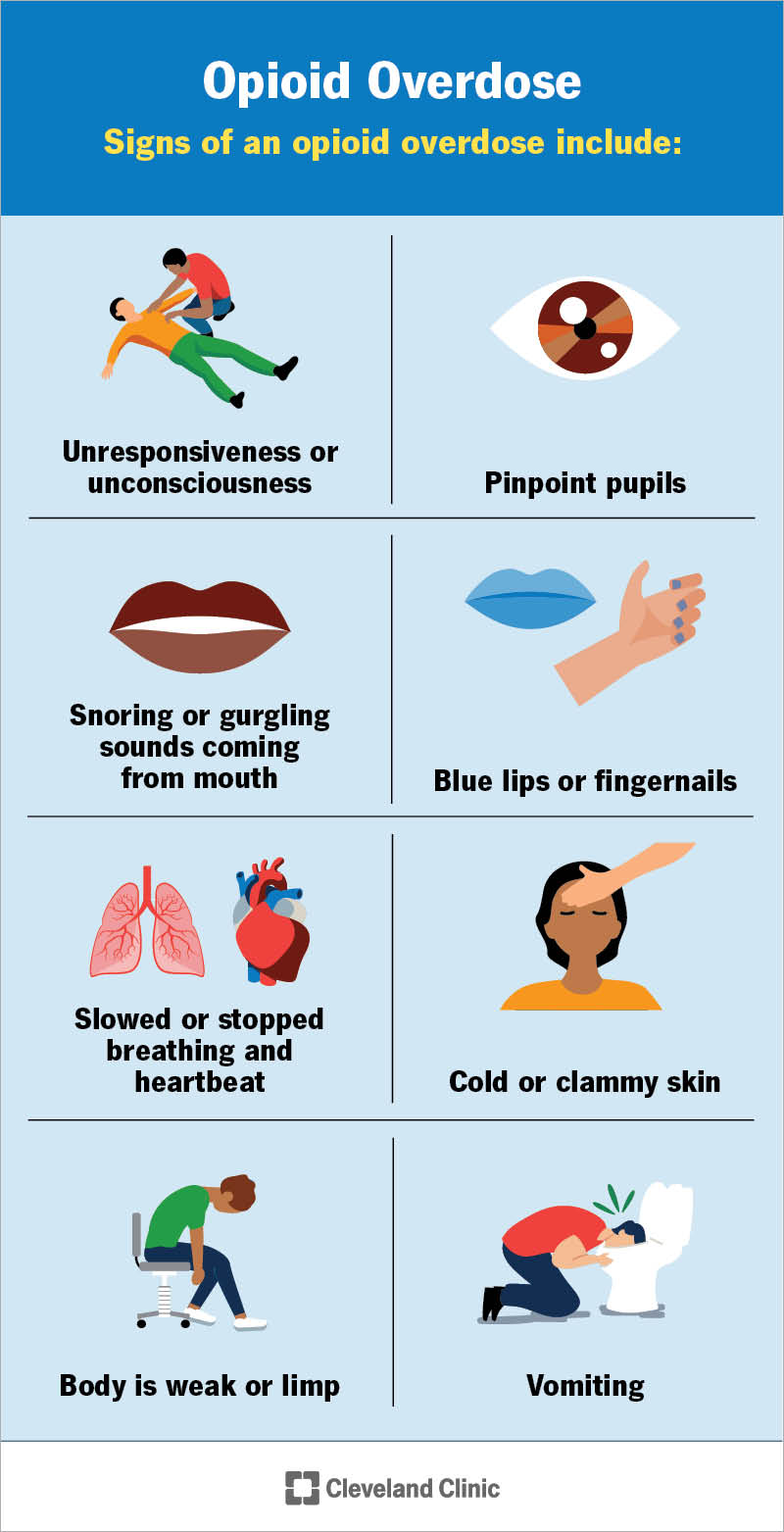
Recognizing Opioid Overdose Warning Signs
Act immediately if you observe these symptoms. Administer an emergency reversal medication if available, then contact 911.
- Unresponsiveness or inability to wake up
- Slowed or stopped breathing and heartbeat
- Pale, blue, or purple lips and fingernails
- Snoring or gurgling noises
- Cold, clammy skin
- Pinpoint pupils (tiny black centers of the eyes)
- Limp limbs or severe weakness
- Vomiting
Common Causes
- Taking an accidental extra dose.
- Consuming a dose larger than your established tolerance.
- Taking opioids prescribed to someone else.
- Mixing opioids with other addictive substances.
Primary Risk Factors
An opioid overdose can happen during a first use or after long-term use. The risk increases for individuals who:
- Have opioid use disorder.
- Resume use after a period of abstinence.
- Inject opioids.
- Take large doses.
- Are over 65 years old.
- Have respiratory conditions (sleep apnea, lung disease), HIV, or liver disease.
Dangerous Drug Combinations
Combining opioids with sedatives (like benzodiazepines) or stimulants (like amphetamines and methamphetamine) drastically increases the risk of an opioid overdose.
The Threat of Unregulated Opioids Nonmedical opioids lack regulation and vary in strength. They are frequently laced with highly potent synthetic drugs like fentanyl or carfentanil. This unknown composition makes an opioid overdose highly likely, even in pills that appear safe.
Diagnosing an Opioid Overdose First responders look for physical signs and check the immediate area for substances. Administering naloxone often serves as a diagnostic tool; if symptoms improve, it confirms an opioid overdose. In a hospital setting, healthcare providers use drug tests and physical exams to assess overall health and identify secondary complications.
Opioid Overdose Management and Treatment
Emergency Reversal Medications Naloxone (Narcan®) and nalmefene (used outside the U.S.) act as emergency treatments. Administered via nasal spray or injection, they block the effects of an opioid overdose and restore breathing within two to five minutes.
Because naloxone wears off in 30 to 90 minutes, symptoms may return. Additional doses may be required before emergency services arrive. Hospitals provide advanced respiratory support, such as intubation, if needed.
Opioid Overdose Prevention Strategies
- Keep naloxone on hand if you or someone close to you uses opioids.
- Avoid using opioids alone.
- Never mix opioids with other drugs or alcohol.
- Store medications securely away from children.
- Educate family and friends on how to spot and respond to an opioid overdose emergency
Gyath Shammha
References
Cleveland Clinic’s health articles are based on evidence-backed information and review by medical professionals to ensure accuracy, reliability and up-to-date clinical standards.
View Sources
World Health Organization. Opioid overdose (https://www.who.int/news-room/fact-sheets/detail/opioid-overdose). Last updated 8/29/2023. Accessed 5/11/2025.
Centers for Disease Control and Prevention (U.S.). About Overdose Prevention(https://www.cdc.gov/overdose-prevention/about/index.html). Last updated 10/30/2024. Accessed 5/11/2025.
Krausz RM, Westenberg JN, Ziafat K. The Opioid Overdose Crisis as a Global Health Challenge(https://pubmed.ncbi.nlm.nih.gov/33901060/). Curr Opin Psychiatry. 2021 Jul 1;34(4):405-412. Accessed 5/11/2025.
National Institute on Drug Abuse (U.S.). Naloxone DrugFacts(https://nida.nih.gov/publications/drugfacts/naloxone). Last reviewed 1/2022. Accessed 5/11/2025.
National Library of Medicine (U.S.). Opioid Overdose (https://medlineplus.gov/opioidoverdose.html). Last updated 3/25/2024. Accessed 5/11/2025.
Regina AC, Goyal A, Mechanic OJ. Opioid Toxicity (https://www.ncbi.nlm.nih.gov/books/NBK470415/). 2025 Jan 22.In: StatPearls [Internet]. Treasure Island (FL): StatPearls Publishing; 2025 Jan-. Accessed 5/11/2025.
Substance Abuse and Mental Health Services Administration (U.S.). Opioid Overdose Reversal Medications (OORM) (https://www.samhsa.gov/substance-use/treatment/overdose-prevention/opioid-overdose-reversal). Last updated 3/26/2024. Accessed 5/11/2025.
Substance Abuse and Mental Health Services Administration (U.S.). What is Opioid Overdose? Treatments & Preventions (https://www.samhsa.gov/substance-use/treatment/overdose-prevention). Last updated 3/29/2024. Accessed 5/11/2025.